
how to get around busan
Navigating Busan’s vibrant streets is simpler than you might think. Whether you prefer buses, subways, or taxis, knowing your options helps you explore the city comfortably and save time.
What is the easiest way to get around Busan for first-time visitors?
The easiest way to get around Busan for first-time visitors is by using the city's extensive subway system combined with its comprehensive bus network and readily available taxis. This combination offers convenient, flexible, and efficient travel options that cover most areas, making it simple to explore both popular attractions and local neighborhoods.
Three main ways to move around
Overview of Busan's Public Transportation System
Busan's public transportation has evolved from a fragmented set of options into a well-integrated network, making citywide travel more accessible than ever. Today, the system includes an extensive subway network, a comprehensive bus fleet, and widely available taxis, all coordinated to cover urban and suburban areas efficiently. The subway alone boasts five lines spanning over 100 kilometers, connecting major districts and tourist hotspots. Meanwhile, buses fill in the gaps with frequent routes reaching neighborhoods beyond subway reach. Understanding this layered infrastructure is key to navigating Busan smoothly, as it offers multiple choices depending on your destination, budget, and time constraints.
How to Get Around Busan: Buses, Subways, and Taxis
Buses
Buses in Busan serve as the backbone for reaching areas not covered by the subway. With color-coded routes – blue for main arteries, green for local circuits, and red for express lines – they provide a clear system for travelers. Tickets can be purchased on board or via transit cards, and buses run frequently from early morning until late evening.
Subways
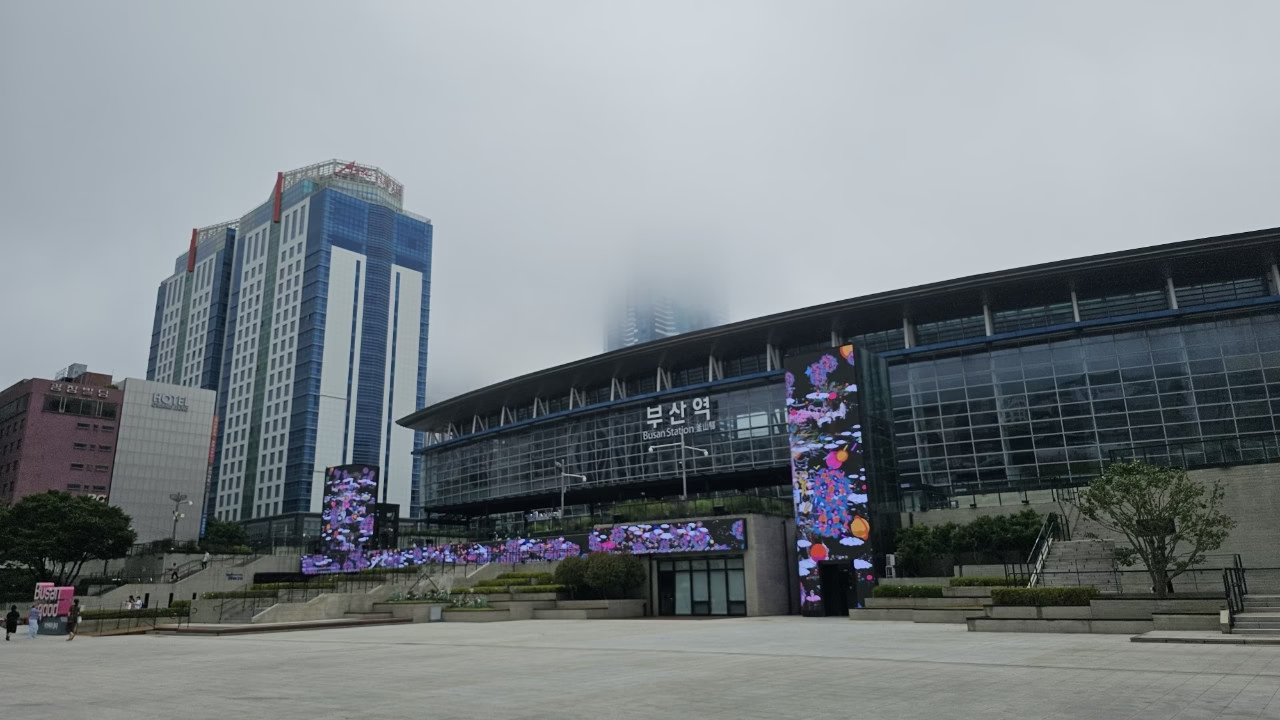
The subway is often the fastest way to traverse the city, especially during peak hours. Stations are well-marked in English and Korean, and trains arrive every 5-10 minutes. The network connects key locations like Haeundae Beach, Seomyeon shopping district, and Busan Station.
Taxis
Taxis offer flexible door-to-door service but come at a higher cost. They are plentiful and safe, with most drivers understanding basic English or navigation apps. For short trips or late-night travel when other options dwindle, taxis provide a reliable alternative.
Smart Route Planning for Smooth Travel in Busan
• Use Transit Apps: Leveraging apps like KakaoMap or Naver Map simplifies route planning by providing real-time schedules and transfer information. • Combine Modes: For example, take the subway to a central hub and switch to a local bus for last-mile access. • Avoid Rush Hours: Traveling outside 7-9 AM and 5-7 PM reduces crowding and speeds up your journey. • Plan Transfers Ahead: Knowing which stations offer easy transfers between lines can save walking time and confusion. • Check Fare Zones: Some routes have distance-based fares; planning shorter segments can reduce costs.
Top Movement Tips for Tourists Exploring Busan
- Carry a T-money card for smooth payments across buses, subways, and taxis, avoiding the hassle of buying individual tickets.
- Prioritize the subway for longer distances to bypass traffic and ensure punctuality.
- Use landmarks and station names in Korean to communicate with taxi drivers effectively.
- Wear comfortable shoes; some transfers require walking between stations or stops.
- Download offline maps to navigate areas with limited internet access, especially near beaches or mountains.
Transit Hacks to Save Time and Money in Busan
• Purchase a rechargeable transportation card like T-money or Cashbee to get discounted fares and avoid cash transactions. • Use express bus lines for faster travel between distant districts, cutting down commute times. • Opt for multi-day transit passes if staying longer, which offer unlimited rides at a fixed price. • Avoid taxis during rush hours to prevent surge pricing and traffic delays. • Combine walking with public transit; Busan’s compact neighborhoods often reward exploration on foot, saving transit costs.
Using Rental Options and Alternative Transport in Busan
Busan has expanded beyond traditional transit with rental bikes and electric scooters becoming popular for short trips and scenic routes. Bike-sharing programs are accessible via smartphone apps, allowing users to pick up and drop off bikes at designated stations, particularly around Haeundae and Gwangan beaches. Scooters offer a quicker alternative but require caution due to traffic conditions and local regulations. Car rentals are available but less practical given Busan’s efficient public transit and parking challenges. These alternatives provide flexible, eco-friendly ways to explore the city’s diverse landscapes when combined with buses and subways.
Walking this part of Busan
Busan is a city you can cross on foot. The coastal trail network runs through most of the places on this page.
- Galmaetgil, Busan’s 278 km coastal trail
Check the hours before you go
Opening times, admission prices, ferry sailings and seasonal closures in Busan change more often than travel guides are updated, and the beach season, festival dates and observatory hours are all set administratively rather than by custom. The city’s own tourism listings and the municipal notice board carry the current version; anything reproduced here is a starting point rather than a timetable.
The same applies to transport. Subway operating hours shift on public holidays, and the official operator publishes those changes rather than the aggregator apps.
What This Page Does Not Cover
This page reflects our own research and, where noted, our own visits, on How to Get Around Busan: Essential Travel Tips at the time of writing. It does not show every option available, it does not track prices (these change too often to keep accurate here), and it cannot account for individual mobility, budget, or seasonal closures on the day you travel.
What Should You Know Before You Go?
See the sections above for the specifics on How to Get Around Busan: Essential Travel Tips; this page is meant as a starting point, not the final word – confirm current hours and conditions directly before you travel.