Hiking in Korea: A Unique Urban Adventure

Discover the Thrill of Hiking in Korea: An Unforgettable Urb

Korea offers a unique blend of urban accessibility and natural beauty, making it an ideal destination for foreign hikers seeking adventure. Experience the convenience of city-to-summit trails and immerse yourself in local culture through these accessible mountain paths.

One of the most compelling reasons foreign visitors are drawn to hiking in Korea is the unparalleled accessibility of its mountains. Unlike many countries where reaching hiking trailheads requires significant travel, Korea boasts numerous 'urban hiking' opportunities. This means you can often reach the entrance of a mountain directly via subway or bus from the heart of the city. For instance, Bukhansan National Park, a stunning mountainous area bordering Seoul, is easily accessible by public transportation, allowing visitors to transition from city exploration to mountain vistas within minutes.

Beyond accessibility, the robust infrastructure surrounding Korean hiking trails significantly enhances the experience for foreign visitors. Modern conveniences such as widespread Wi-Fi coverage even on mountain paths and readily available services like equipment rental and luggage storage contribute to a hassle-free adventure. Imagine arriving in Korea and deciding on a whim to hike a local mountain; you don't need to pack specialized gear.

For many foreign tourists, hiking in Korea offers a coveted opportunity to step beyond typical tourist attractions and engage in a genuine 'local mode' travel experience. Hiking is a deeply ingrained hobby and a popular recreational activity for Koreans of all ages. By choosing to hike, visitors are participating in a quintessential aspect of Korean daily life, observing families, friends, and individuals enjoying the outdoors.

To fully enjoy hiking in Korea, foreign visitors can benefit from a few practical tips. Firstly, understanding the public transportation system is key. Seoul's extensive subway network, for example, connects directly to many national and city parks. Apps like Naver Maps or Kakao Maps are invaluable for navigating public transit and trail routes.

To fully enjoy hiking in Korea, foreign visitors can benefit from a few practical tips. Firstly, understanding the public transportation system is key. Seoul's extensive subway network, for example, connects directly to many national and city parks. Apps like Naver Maps or Kakao Maps are invaluable for navigating public transit and trail routes.

What makes hiking in Korea particularly appealing to foreign visitors?

Hiking in Korea is appealing to foreign visitors primarily due to its exceptional urban accessibility. Many mountains are conveniently reachable via public transport like subways and buses, allowing for spontaneous trips from city centers.

Are Korean mountains safe for solo foreign hikers?

Korean mountains are generally considered safe for solo foreign hikers, thanks to low crime rates and well-maintained trails. However, personal safety precautions are essential.

The best times of year for hiking in Korea for foreigners are spring (April to May) and autumn (September to October). During these seasons, the weather is generally mild and pleasant, with clear skies and comfortable temperatures, making it ideal for outdoor activities.

The best times of year for Hiking in Korea are spring (April to May) and autumn (September to October). During these seasons, the weather is generally mild and pleasant.

Do I need special equipment or gear for Hiking in Korea for Foreigners?

While you can enjoy many Hiking in Korea with just comfortable clothing and shoes, specialized gear can enhance your experience. For basic trails, sturdy walking shoes or light hiking boots are usually sufficient.

How can I best use public transportation to access hiking trails?

Public transportation is an excellent way to access hiking trails in Korea, especially in urban areas. Utilize subway systems in cities like Seoul, Busan, and Daegu, as many parks have stations within walking distance of their entrances.

“}} –>
What makes hiking in Korea particularly appealing to foreign visitors?

Hiking in Korea is appealing to foreign visitors primarily due to its exceptional urban accessibility. Many mountains are conveniently reachable via public transport like subways and buses, allowing for spontaneous trips from city centers.

What makes hiking in Korea particularly appealing to foreign visitors?

Hiking in Korea is appealing to foreign visitors primarily due to its exceptional urban accessibility. Many mountains are conveniently reachable via public transport like subways and buses, allowing for spontaneous trips from city centers.

Are Korean mountains safe for solo foreign hikers?

Korean mountains are generally considered safe for solo foreign hikers, thanks to low crime rates and well-maintained trails. However, personal safety precautions are essential.

The best times of year for hiking in Korea for foreigners are spring (April to May) and autumn (September to October). During these seasons, the weather is generally mild and pleasant, with clear skies and comfortable temperatures, making it ideal for outdoor activities.

The best times of year for Hiking in Korea are spring (April to May) and autumn (September to October). During these seasons, the weather is generally mild and pleasant.

Do I need special equipment or gear for Hiking in Korea for Foreigners?

While you can enjoy many Hiking in Korea with just comfortable clothing and shoes, specialized gear can enhance your experience. For basic trails, sturdy walking shoes or light hiking boots are usually sufficient.

How can I best use public transportation to access hiking trails?

Public transportation is an excellent way to access hiking trails in Korea, especially in urban areas. Utilize subway systems in cities like Seoul, Busan, and Daegu, as many parks have stations within walking distance of their entrances.

“}} –>
Are Korean mountains safe for solo foreign hikers?

Korean mountains are generally considered safe for solo foreign hikers, thanks to low crime rates and well-maintained trails. However, personal safety precautions are essential.

What makes hiking in Korea particularly appealing to foreign visitors?

Hiking in Korea is appealing to foreign visitors primarily due to its exceptional urban accessibility. Many mountains are conveniently reachable via public transport like subways and buses, allowing for spontaneous trips from city centers.

Are Korean mountains safe for solo foreign hikers?

Korean mountains are generally considered safe for solo foreign hikers, thanks to low crime rates and well-maintained trails. However, personal safety precautions are essential.

The best times of year for hiking in Korea for foreigners are spring (April to May) and autumn (September to October). During these seasons, the weather is generally mild and pleasant, with clear skies and comfortable temperatures, making it ideal for outdoor activities.

The best times of year for Hiking in Korea are spring (April to May) and autumn (September to October). During these seasons, the weather is generally mild and pleasant.

Do I need special equipment or gear for Hiking in Korea for Foreigners?

While you can enjoy many Hiking in Korea with just comfortable clothing and shoes, specialized gear can enhance your experience. For basic trails, sturdy walking shoes or light hiking boots are usually sufficient.

How can I best use public transportation to access hiking trails?

Public transportation is an excellent way to access hiking trails in Korea, especially in urban areas. Utilize subway systems in cities like Seoul, Busan, and Daegu, as many parks have stations within walking distance of their entrances.

“}} –>
The best times of year for hiking in Korea for foreigners are spring (April to May) and autumn (September to October). During these seasons, the weather is generally mild and pleasant, with clear skies and comfortable temperatures, making it ideal for outdoor activities.

The best times of year for Hiking in Korea are spring (April to May) and autumn (September to October). During these seasons, the weather is generally mild and pleasant.

What makes hiking in Korea particularly appealing to foreign visitors?

Hiking in Korea is appealing to foreign visitors primarily due to its exceptional urban accessibility. Many mountains are conveniently reachable via public transport like subways and buses, allowing for spontaneous trips from city centers.

Are Korean mountains safe for solo foreign hikers?

Korean mountains are generally considered safe for solo foreign hikers, thanks to low crime rates and well-maintained trails. However, personal safety precautions are essential.

The best times of year for hiking in Korea for foreigners are spring (April to May) and autumn (September to October). During these seasons, the weather is generally mild and pleasant, with clear skies and comfortable temperatures, making it ideal for outdoor activities.

The best times of year for Hiking in Korea are spring (April to May) and autumn (September to October). During these seasons, the weather is generally mild and pleasant.

Do I need special equipment or gear for Hiking in Korea for Foreigners?

While you can enjoy many Hiking in Korea with just comfortable clothing and shoes, specialized gear can enhance your experience. For basic trails, sturdy walking shoes or light hiking boots are usually sufficient.

How can I best use public transportation to access hiking trails?

Public transportation is an excellent way to access hiking trails in Korea, especially in urban areas. Utilize subway systems in cities like Seoul, Busan, and Daegu, as many parks have stations within walking distance of their entrances.

“}} –>
Do I need special equipment or gear for Hiking in Korea for Foreigners?

While you can enjoy many Hiking in Korea with just comfortable clothing and shoes, specialized gear can enhance your experience. For basic trails, sturdy walking shoes or light hiking boots are usually sufficient.

What makes hiking in Korea particularly appealing to foreign visitors?

Hiking in Korea is appealing to foreign visitors primarily due to its exceptional urban accessibility. Many mountains are conveniently reachable via public transport like subways and buses, allowing for spontaneous trips from city centers.

Are Korean mountains safe for solo foreign hikers?

Korean mountains are generally considered safe for solo foreign hikers, thanks to low crime rates and well-maintained trails. However, personal safety precautions are essential.

The best times of year for hiking in Korea for foreigners are spring (April to May) and autumn (September to October). During these seasons, the weather is generally mild and pleasant, with clear skies and comfortable temperatures, making it ideal for outdoor activities.

The best times of year for Hiking in Korea are spring (April to May) and autumn (September to October). During these seasons, the weather is generally mild and pleasant.

Do I need special equipment or gear for Hiking in Korea for Foreigners?

While you can enjoy many Hiking in Korea with just comfortable clothing and shoes, specialized gear can enhance your experience. For basic trails, sturdy walking shoes or light hiking boots are usually sufficient.

How can I best use public transportation to access hiking trails?

Public transportation is an excellent way to access hiking trails in Korea, especially in urban areas. Utilize subway systems in cities like Seoul, Busan, and Daegu, as many parks have stations within walking distance of their entrances.

“}} –>
How can I best use public transportation to access hiking trails?

Public transportation is an excellent way to access hiking trails in Korea, especially in urban areas. Utilize subway systems in cities like Seoul, Busan, and Daegu, as many parks have stations within walking distance of their entrances.

Plan Your Korean Hiking Adventure Today!

Ready to experience the unique blend of urban convenience and natural beauty that Korea offers? Discover accessible trails and immerse yourself in local culture.

Explore Korean Hiking Tours

#

“tagName”: “div”} –>

What makes hiking in Korea particularly appealing to foreign visitors?

Hiking in Korea is appealing to foreign visitors primarily due to its exceptional urban accessibility. Many mountains are conveniently reachable via public transport like subways and buses, allowing for spontaneous trips from city centers.

Are Korean mountains safe for solo foreign hikers?

Korean mountains are generally considered safe for solo foreign hikers, thanks to low crime rates and well-maintained trails. However, personal safety precautions are essential.

The best times of year for hiking in Korea for foreigners are spring (April to May) and autumn (September to October). During these seasons, the weather is generally mild and pleasant, with clear skies and comfortable temperatures, making it ideal for outdoor activities.

The best times of year for Hiking in Korea are spring (April to May) and autumn (September to October). During these seasons, the weather is generally mild and pleasant.

Do I need special equipment or gear for Hiking in Korea for Foreigners?

While you can enjoy many Hiking in Korea with just comfortable clothing and shoes, specialized gear can enhance your experience. For basic trails, sturdy walking shoes or light hiking boots are usually sufficient.

How can I best use public transportation to access hiking trails?

Public transportation is an excellent way to access hiking trails in Korea, especially in urban areas. Utilize subway systems in cities like Seoul, Busan, and Daegu, as many parks have stations within walking distance of their entrances.

“}} –>
Are Korean mountains safe for solo foreign hikers?

Korean mountains are generally considered safe for solo foreign hikers, thanks to low crime rates and well-maintained trails. However, personal safety precautions are essential.

What makes hiking in Korea particularly appealing to foreign visitors?

Hiking in Korea is appealing to foreign visitors primarily due to its exceptional urban accessibility. Many mountains are conveniently reachable via public transport like subways and buses, allowing for spontaneous trips from city centers.

Are Korean mountains safe for solo foreign hikers?

Korean mountains are generally considered safe for solo foreign hikers, thanks to low crime rates and well-maintained trails. However, personal safety precautions are essential.

The best times of year for hiking in Korea for foreigners are spring (April to May) and autumn (September to October). During these seasons, the weather is generally mild and pleasant, with clear skies and comfortable temperatures, making it ideal for outdoor activities.

The best times of year for Hiking in Korea are spring (April to May) and autumn (September to October). During these seasons, the weather is generally mild and pleasant.

Do I need special equipment or gear for Hiking in Korea for Foreigners?

While you can enjoy many Hiking in Korea with just comfortable clothing and shoes, specialized gear can enhance your experience. For basic trails, sturdy walking shoes or light hiking boots are usually sufficient.

How can I best use public transportation to access hiking trails?

Public transportation is an excellent way to access hiking trails in Korea, especially in urban areas. Utilize subway systems in cities like Seoul, Busan, and Daegu, as many parks have stations within walking distance of their entrances.

“}} –>
The best times of year for hiking in Korea for foreigners are spring (April to May) and autumn (September to October). During these seasons, the weather is generally mild and pleasant, with clear skies and comfortable temperatures, making it ideal for outdoor activities.

The best times of year for Hiking in Korea are spring (April to May) and autumn (September to October). During these seasons, the weather is generally mild and pleasant.

What makes hiking in Korea particularly appealing to foreign visitors?

Hiking in Korea is appealing to foreign visitors primarily due to its exceptional urban accessibility. Many mountains are conveniently reachable via public transport like subways and buses, allowing for spontaneous trips from city centers.

Are Korean mountains safe for solo foreign hikers?

Korean mountains are generally considered safe for solo foreign hikers, thanks to low crime rates and well-maintained trails. However, personal safety precautions are essential.

The best times of year for hiking in Korea for foreigners are spring (April to May) and autumn (September to October). During these seasons, the weather is generally mild and pleasant, with clear skies and comfortable temperatures, making it ideal for outdoor activities.

The best times of year for Hiking in Korea are spring (April to May) and autumn (September to October). During these seasons, the weather is generally mild and pleasant.

Do I need special equipment or gear for Hiking in Korea for Foreigners?

While you can enjoy many Hiking in Korea with just comfortable clothing and shoes, specialized gear can enhance your experience. For basic trails, sturdy walking shoes or light hiking boots are usually sufficient.

How can I best use public transportation to access hiking trails?

Public transportation is an excellent way to access hiking trails in Korea, especially in urban areas. Utilize subway systems in cities like Seoul, Busan, and Daegu, as many parks have stations within walking distance of their entrances.

“}} –>
Do I need special equipment or gear for Hiking in Korea for Foreigners?

While you can enjoy many Hiking in Korea with just comfortable clothing and shoes, specialized gear can enhance your experience. For basic trails, sturdy walking shoes or light hiking boots are usually sufficient.

What makes hiking in Korea particularly appealing to foreign visitors?

Hiking in Korea is appealing to foreign visitors primarily due to its exceptional urban accessibility. Many mountains are conveniently reachable via public transport like subways and buses, allowing for spontaneous trips from city centers.

Are Korean mountains safe for solo foreign hikers?

Korean mountains are generally considered safe for solo foreign hikers, thanks to low crime rates and well-maintained trails. However, personal safety precautions are essential.

The best times of year for hiking in Korea for foreigners are spring (April to May) and autumn (September to October). During these seasons, the weather is generally mild and pleasant, with clear skies and comfortable temperatures, making it ideal for outdoor activities.

The best times of year for Hiking in Korea are spring (April to May) and autumn (September to October). During these seasons, the weather is generally mild and pleasant.

Do I need special equipment or gear for Hiking in Korea for Foreigners?

While you can enjoy many Hiking in Korea with just comfortable clothing and shoes, specialized gear can enhance your experience. For basic trails, sturdy walking shoes or light hiking boots are usually sufficient.

How can I best use public transportation to access hiking trails?

Public transportation is an excellent way to access hiking trails in Korea, especially in urban areas. Utilize subway systems in cities like Seoul, Busan, and Daegu, as many parks have stations within walking distance of their entrances.

“}} –>
How can I best use public transportation to access hiking trails?

Public transportation is an excellent way to access hiking trails in Korea, especially in urban areas. Utilize subway systems in cities like Seoul, Busan, and Daegu, as many parks have stations within walking distance of their entrances.

:generateblocks/element {“uniqueId”:”f2a93172″,”tagName”:”div”,”globalClasses”:[“gbp-section”],”metadata”:{“name”:”CTA section”}} –>

toc_items

toc_item

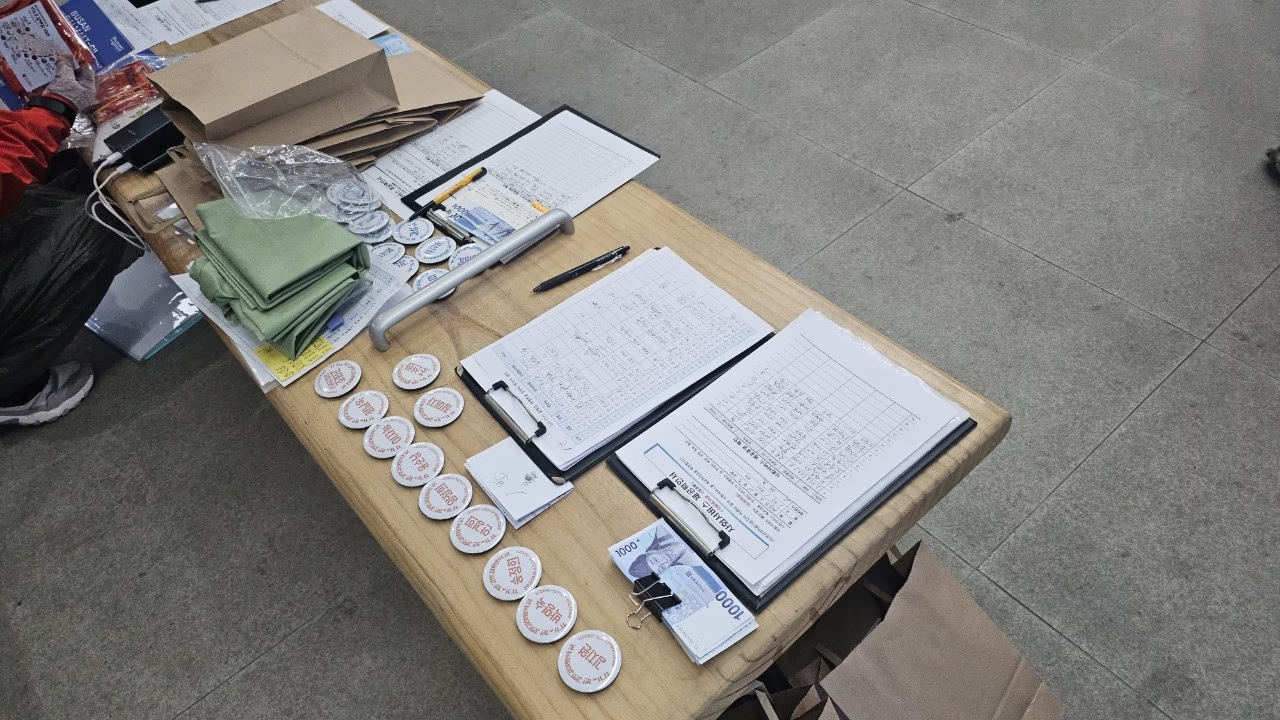
Social Contribution Walking Programs: Your Guide

What is the primary purpose of social contribution walking programs?

The primary purpose of social contribution walking programs is to combine physical activity with charitable giving and community support. These events aim to raise funds and awareness for various social causes, such as supporting vulnerable populations like individuals with developmental disabilities.

Are there any age restrictions for participating in these walking events?

While specific age restrictions can vary depending on the organizing body and the nature of the event, social contribution walking programs are generally open to a wide range of ages.

What should I do if I experience a medical issue during the walk?

If you experience a medical issue during the walk, your immediate safety is the top priority. First, try to alert a nearby event marshal, volunteer, or fellow participant to your situation.

Can I bring my pet to a social contribution walking programs?

The policy regarding pets can differ significantly between various social contribution walking programs. Some events may allow well-behaved pets on leashes, while others may prohibit pets altogether.

How are the donations collected and utilized by the organizers?

Donations collected during social contribution walking programs are typically managed with transparency and accountability. Organizers usually specify the beneficiary organization or cause to which the funds will be directed.

oggle {“uniqueId”:”e278aebe-3″,”tagName”:”div”,”styles”:{“display”:”flex”,”alignItems”:”center”,”justifyContent”:”space-between”,”color”:”#000000″,”textAlign”:”left”,”columnGap”:”1em”,”\u0026:is(:hover, :focus)”:{“color”:”currentColor”},”\u0026:is(.gb-block-is-current, .gb-block-is-current:hover, .gb-block-is-current:focus)”:{“fontWeight”:”600″}},”css”:”.gb-accordion__toggle-e278aebe{align-items:center;color:#000000;column-gap:1em;display:flex;justify-content:space-between;text-align:left}.gb-accordion__toggle-e278aebe:is(.gb-block-is-current,.gb-block-is-current:hover,.gb-block-is-current:focus){font-weight:600}.gb-accordion__toggle-e278aebe:is(:hover,:focus){color:currentColor}”,”htmlAttributes”:{“id”:”gb-accordion-toggle-e278aebe”}} –>
Can I bring my pet to a social contribution walking programs?

The policy regarding pets can differ significantly between various social contribution walking programs. Some events may allow well-behaved pets on leashes, while others may prohibit pets altogether.

How are the donations collected and utilized by the organizers?

Donations collected during social contribution walking programs are typically managed with transparency and accountability. Organizers usually specify the beneficiary organization or cause to which the funds will be directed.

:generateblocks/element {“uniqueId”:”f2a93172″,”tagName”:”div”,”globalClasses”:[“gbp-section”],”metadata”:{“name”:”CTA section”}} –>

toc_items

toc_item

Galmaetgil Trail Walking School

What is the Galmaetgil Trail Walking School all about?

The Galmaetgil Trail Walking School is a unique educational program designed to immerse participants in the beauty and cultural significance of the Galmaetgil trails. It's more than just a hike; it's an opportunity to learn about the history, ecology, and local traditions of the region while developing your walking skills. Experienced guides will lead you through various sections of the trail, offering insights and practical advice on safe and enjoyable trekking. Whether you're a seasoned hiker or a beginner, the school provides a structured and enriching way to experience the Galmaetgil.

Who is the Galmaetgil Trail Walking School for?

This walking school is ideal for anyone interested in exploring the stunning Galmaetgil trails in a more meaningful way. It caters to individuals, couples, and small groups seeking an educational and active experience. Whether you're a tourist looking to discover the hidden gems of the area, a local wanting to deepen your appreciation for your surroundings, or someone looking to improve their hiking fitness and knowledge, the Galmaetgil Trail Walking School offers a valuable opportunity. No prior extensive hiking experience is necessary, as the program is adaptable to different fitness levels.

What kind of training or skills can I expect to learn at the Galmaetgil Walking School?

At the Galmaetgil Trail Walking School, you'll acquire a range of practical skills essential for enjoyable and safe trail walking. This includes learning proper walking techniques to conserve energy and prevent injuries, understanding how to navigate different terrains, and developing an awareness of weather conditions and how to prepare for them. You'll also gain insights into trail etiquette, environmental responsibility, and basic first-aid relevant to outdoor activities. The curriculum is designed to enhance your confidence and competence on the Galmaetgil and other trails.

How long are the courses and what is typically included in the Galmaetgil Trail Walking School package?

The duration of courses at the Galmaetgil Trail Walking School can vary, with options ranging from single-day workshops to multi-day immersive programs. Typically, a package will include guided walks led by experienced instructors, educational materials covering trail lore and safety, and sometimes even accommodation and meals depending on the chosen program. You can expect to cover specific sections of the Galmaetgil, learning about their unique characteristics. It's advisable to check the specific details of each course offering for precise inclusions and schedules.

What should I bring with me to the Galmaetgil Trail Walking School?

To make the most of your experience at the Galmaetgil Trail Walking School, it's important to come prepared. Essential items include comfortable, broken-in hiking boots or sturdy walking shoes, weather-appropriate clothing in layers (including rain gear), a backpack to carry your essentials, a reusable water bottle, sunscreen, a hat, and insect repellent. You might also want to bring a small first-aid kit, snacks, and a camera to capture the beautiful scenery. The school will likely provide a more detailed packing list upon registration.

aebe-4″,”tagName”:”div”,”styles”:{“display”:”flex”,”alignItems”:”center”,”justifyContent”:”space-between”,”color”:”#000000″,”textAlign”:”left”,”columnGap”:”1em”,”\u0026:is(:hover, :focus)”:{“color”:”currentColor”},”\u0026:is(.gb-block-is-current, .gb-block-is-current:hover, .gb-block-is-current:focus)”:{“fontWeight”:”600″}},”css”:”.gb-accordion__toggle-e278aebe{align-items:center;color:#000000;column-gap:1em;display:flex;justify-content:space-between;text-align:left}.gb-accordion__toggle-e278aebe:is(.gb-block-is-current,.gb-block-is-current:hover,.gb-block-is-current:focus){font-weight:600}.gb-accordion__toggle-e278aebe:is(:hover,:focus){color:currentColor}”,”htmlAttributes”:{“id”:”gb-accordion-toggle-e278aebe”}} –>
What should I bring with me to the Galmaetgil Trail Walking School?

To make the most of your experience at the Galmaetgil Trail Walking School, it's important to come prepared. Essential items include comfortable, broken-in hiking boots or sturdy walking shoes, weather-appropriate clothing in layers (including rain gear), a backpack to carry your essentials, a reusable water bottle, sunscreen, a hat, and insect repellent. You might also want to bring a small first-aid kit, snacks, and a camera to capture the beautiful scenery. The school will likely provide a more detailed packing list upon registration.

:generateblocks/element {“uniqueId”:”f2a93172″,”tagName”:”div”,”globalClasses”:[“gbp-section”],”metadata”:{“name”:”CTA section”}} –>

TOC_ITEM_TEXT

What is Busan Galmaetgil? A Comprehensive Guide to Busan’s Galmaetgil Trail

Understanding Busan Galmaetgil: Busan’s Scenic Galmaetgil Trail

Explore the unique greenway of Busan, combining sea, mountains, rivers, and hot springs along the Galmaetgil trail, a cultural and historical walking path established since 2009.

  • Busan Galmaetgil means 'Galmaetgil,' combining Busan's seagull symbol and the word for path.
  • It was named in 2009 through a citizen contest.
  • The trail reflects Busan's natural features: sea, mountains, rivers, and hot springs.
  • The greenway includes historical, cultural, and festival sites.
  • Originally 20 routes covering 263.8 km, expanded to 21 routes and 278.8 km by 2017.
  • In 2023, the trail was reorganized into 9 courses with 23 routes for easier walking.
  • The trail uses existing paths and newly constructed decks adapted to Busan's terrain.
  • Busan Galmaetgil means 'Galmaetgil,' combining Busan's seagull symbol and the word for path.
  • It was named in 2009 through a citizen contest.
  • The trail reflects Busan's natural features: sea, mountains, rivers, and hot springs.
  • The greenway includes historical, cultural, and festival sites.
  • Originally 20 routes covering 263.8 km, expanded to 21 routes and 278.8 km by 2017.
  • In 2023, the trail was reorganized into 9 courses with 23 routes for easier walking.
  • The trail uses existing paths and newly constructed decks adapted to Busan's terrain.

Busan Galmaetgil refers to the extensive greenway network throughout Busan, South Korea, officially named in 2009 through a citizen contest. The name combines '갈매기' (seagull), Busan's city bird, and '길' (path), with '갈매' also meaning 'deep sea' in pure Korean. This trail system highlights Busan's natural and cultural heritage.

The Galmaetgil trail captures Busan's regional characteristics of sea, mountains, rivers, and hot springs, offering a unique walking experience where one can transition from coastal paths to mountain trails, riversides, and relaxing hot springs. It also showcases Busan's history from ancient times to modern days, along with its cultural festivals and artistic heritage.

Since 2009, Busan city has developed this greenway by utilizing existing walking and hiking paths, supplemented with new decks and trails adapted to the local terrain. The trail is divided into coastal, forest, riverside, and urban routes, totaling 9 main courses. Initially spanning 263.8 km across 20 routes, it was expanded and reorganized to 278.8 km with 21 sections by 2017, and further refined in 2023 to 9 courses with 23 routes for easier access.

What does Busan Galmaetgil mean?

It refers to Busan's greenway trail system named 'Galmaetgil,' combining the city's seagull symbol and the Korean word for path.

When was the Galmaetgil trail established?

The trail was officially named and developed starting in 2009.

How long is the Galmaetgil trail?

As of 2023, the trail covers approximately 278.8 kilometers divided into 9 main courses and 23 routes.

What natural features does the Galmaetgil trail include?

The trail includes coastal paths, mountain trails, riverside walks, and hot springs.

Can the Galmaetgil trail be accessed easily?

Yes, the trail was reorganized in 2023 to improve accessibility and ease of walking for visitors.

Discover Busan Galmaetgil Today

Experience the unique blend of nature, history, and culture along Busan’s Galmaetgil trail. Plan your walk and explore the scenic routes that only Busan can offer.

Book Your Walk Now SCHEMA_JSON_LD_AREA

snapshot fm

HERO_TITLE

HERO_INTRO

Quick Anser Sections 3

QUICK_ANSWER_TITLE

QUICK_ANSWER_TEXT

body Sections 333

SECTION_TITLE

SECTION_BODY

SECTION_TITLE

SECTION_BODY

Faq Sections 333

FAQ_TITLE

FAQ_QUESTION

FAQ_ANSWER

CTA Sections333

CTA_TITLE

CTA_BODY

CTA_BUTTON_TEXT

TOC Sections

COMPARISON Sections

COMPARISON_TABLE_TITLE

COMPARISON_TABLE_HTML

Face Lift in Korea: The Complete Guide for Foreigners

Face Lift in Korea: The Complete Guide for Foreigners

You’ve probably heard about it for years — flawless skin, sculpted jawlines, and faces that seem to defy aging. K-beauty didn’t just introduce the world to sheet masks and essences. It quietly set the global standard for cosmetic dermatology. And today, more international patients than ever are booking flights to Seoul not just for the culture, but for something far more personal: a face lift in Korea.

‘Face Lift Korea’ is more than a search trend. It reflects a genuine global shift in how people approach anti-aging treatment. Cutting-edge non-surgical technology, significantly shorter recovery times, and the appeal of combining transformative care with an unforgettable trip to Seoul — the reasons are real, and they’re growing.

According to the Korea Health Industry Development Institute (KHIDI), South Korea welcomed over 705,000 international medical tourists in 2024. Dermatology and cosmetic procedures consistently rank among the top reasons for these visits. Gangnam, Seoul, sits at the center of this movement — home to the highest concentration of board-certified dermatologists in the country.

In this guide, you’ll find everything you need to know: which face lift options are available in Korea, how non-surgical laser lifting works, what to expect before and after your procedure, how to choose the right clinic, and what real international patients are saying. If you’re seriously considering a face lift in Korea, this is your most complete starting point.

What Is a Face Lift? (And Why Korea Leads the World in It)

A face lift — medically known as a rhytidectomy — is a cosmetic procedure designed to reduce visible signs of aging in the face and neck. It tightens sagging skin, softens deep wrinkles, and restores a more defined, youthful facial contour.

For decades, surgical face lifts were the only meaningful option available. Korean dermatology, however, has pioneered a new generation of non-surgical lifting procedures that deliver compelling, natural-looking results — without a single incision.

Korea’s approach is built on precision. Rather than simply pulling skin tighter, Korean clinicians analyze skin thickness, elasticity, fat distribution, and the degree of sagging before designing a fully customized treatment plan. This commitment to individualized care is what fundamentally sets Face Lift Korea apart from most clinics in the US or Europe.

The most sought-after non-surgical face lift options currently available in Korea include:

• Ultherapy Prime — high-intensity focused ultrasound (HIFU) targeting the SMAS layer

• Thermage FLX — radiofrequency (RF) energy stimulating deep collagen regeneration

• Combination protocols — multi-device treatments customized to your skin’s specific needs

These energy-based treatments stimulate collagen production deep within the skin’s structural layers, producing gradual, natural-looking lifting effects that develop over 2–6 months following treatment.

Why Get a Face Lift in Korea?

Beyond clinical reputation, there are practical and lifestyle reasons why Face Lift Korea continues to attract international patients from the US and around the world.

Technology Differences: Procedures Not Yet Widely Available Elsewhere

Korean dermatology clinics are known for being among the earliest adopters of the latest energy-based devices. Equipment such as Ultherapy Prime and Thermage FLX is available at certified Gangnam clinics — performed by physicians who have completed rigorous manufacturer training and, in many cases, hold official Key Doctor certifications for globally recognized, FDA-approved products.

In many countries, including the US, these combination protocols are frequently delegated to nurses or aestheticians. South Korea’s medical regulations require that a licensed physician personally perform these treatments — a meaningful distinction that adds a critical layer of clinical oversight and accountability.

Key advantages of non-surgical face lift in Korea:

• No incision required — no surgical risk, no scarring

• Short recovery — most patients resume normal activity within 1–3 days

• Natural, gradual improvement — results develop progressively over months

• Precision energy calibration — physicians fine-tune intensity to match your specific skin

• Access to multiple certified devices — often available in a single visit

Korea is also uniquely suited for medical tourism thanks to its efficient healthcare infrastructure, English-speaking support at international clinics, and the opportunity to explore one of Asia’s most vibrant cities during your stay.

What to Expect: Before, During & After Your Treatment in Seoul

Planning a medical trip to Korea requires a bit more preparation than a typical appointment back home. Here’s a realistic, step-by-step picture of what your experience will look like.

Before Your Appointment: Most reputable Gangnam dermatology clinics offer pre-visit consultations via email, KakaoTalk, or WhatsApp. You’ll share photos, describe your concerns, and receive a preliminary treatment recommendation before you ever board a plane. This means you can arrive in Seoul with a clear, agreed-upon plan.

During Your Treatment: Non-surgical laser lifting sessions typically run 30–90 minutes. A topical numbing cream is applied beforehand. The physician uses a specialized handpiece to deliver focused ultrasound or radiofrequency energy to targeted skin layers beneath the surface. You may feel warmth or a mild tingling sensation — this is normal and signals the energy is working as intended.

After Your Treatment: Mild redness or slight swelling may occur for 24–48 hours. Most patients are comfortable enough for light activities or casual outings within a day or two. Full lifting results appear gradually over 2–6 months as the skin’s collagen network remodels.

Recovery Timeline for Travelers: When Can You Fly Home?

This is one of the most frequently asked questions from international patients — and it’s one of the most compelling advantages non-surgical lifting holds over traditional surgery.

• Days 1–2: Mild redness and warmth. Rest is recommended.

• Day 3: Most patients are comfortable for light sightseeing.

• Days 5–7: Safe for long-haul flights for most patients.

• Weeks 2–3: Skin fully settles. Early tightening effects begin to appear.

• Months 2–6: Peak collagen remodeling. Best results become visible.

This recovery profile makes non-surgical face lift in Korea a genuinely practical option for a 5–10 day trip that blends treatment with travel.

How to Choose the Right Dermatology Clinic in Korea

Not all clinics in Gangnam offer the same level of care. With hundreds of skin clinics competing for attention, knowing what to look for — and what to avoid — is essential for protecting both your safety and your results.

Physician-Led Procedures — What to Look For

• Physician-performed treatments: Confirm that a licensed dermatologist personally performs your procedure — not a nurse or aesthetician. This is legally required in Korea and is a baseline you should verify.

• Manufacturer certifications: Look for clinics where doctors hold official Key Doctor or trainer status for major device brands such as Ulthera or Thermage. This signals a higher standard of training.

• Consultation quality: A trustworthy clinic will conduct a thorough skin assessment and may recommend a more suitable treatment if it better matches your needs — not simply the most expensive option.

• English-language support: Reputable medical tourism clinics in Gangnam provide English-speaking coordinators throughout your visit, from the first inquiry through post-treatment follow-up.

• Transparent pricing: All fees should be provided in writing before your procedure, with no surprise charges after the fact.

Red Flags to Avoid

• Clinics that cannot verify or display physician credentials

• High-pressure sales tactics or on-the-spot package offers

• Refusal to provide a written treatment plan before your appointment

• No informed consent documentation before the procedure

• Inability to communicate clearly in English for international patients

Gangnam, Seoul, is home to the highest concentration of board-certified dermatologists in South Korea. Selecting a clinic in this district — particularly one with established experience serving international patients — significantly raises your baseline of safety and quality of care.

Real Patient Experiences

International patients who have undergone non-surgical face lift treatments at Korean dermatology clinics consistently highlight a few common themes in their accounts.

“I was nervous about traveling abroad for a cosmetic procedure, but the consultation was incredibly thorough. The doctor explained exactly which layers of my skin would be targeted and why. I felt genuinely informed the entire time.” — Patient from California, USA

“The recovery was so much faster than I expected. I was out sightseeing in Insadong just two days after my Ultherapy session. Six months later, my jawline looks better than it has in a decade.” — Patient from New York, USA

“What impressed me most was that the doctor didn’t try to upsell me. He assessed my skin and suggested a targeted combination approach that actually addressed my specific concerns.” — Patient from Texas, USA

Summary for International Patients: Korea offers non-surgical face lift options that are physician-led, technology-forward, and designed for patients who want natural results with minimal downtime. For medical travelers, the short recovery timeline makes this one of the most practical and rewarding cosmetic investments available.

The Expertise Behind Korean Dermatology Clinics

Walking into a leading Gangnam dermatology clinic, the expertise behind your treatment is built into every consultation and every clinical decision — not simply displayed on a wall.

Medical teams at top Korean dermatology clinics frequently hold official Key Doctor status for two of the most globally respected FDA-approved injectable brands: Restylane and Radiesse. These designations are not honorary titles. They are awarded by the manufacturers themselves after rigorous evaluation of clinical knowledge, consistent technique, and documented patient outcomes.

With thousands of successful filler and lifting procedures in their records, these specialists bring a depth of hands-on experience that simply cannot be matched by practitioners who perform such treatments infrequently. Their advisory roles with leading global brands also mean they remain at the forefront of protocol development — and their patients benefit directly from that ongoing clinical involvement.

The standard at Korea’s leading dermatology clinics is not merely good results. It is precision, accountability, and individualized attention — the combination that drives patients from around the world to make the trip.

Frequently Asked Questions

Is it safe to get a face lift in Korea?

Yes. South Korea is one of the world’s most regulated and internationally recognized medical tourism destinations. The Korean Ministry of Health and Welfare oversees clinic licensing and physician certification standards. Non-surgical laser lifting procedures carry a lower risk profile than surgical alternatives, and Gangnam’s top dermatology clinics use only globally certified devices operated by licensed physicians.

What is the best face lift option for first-time patients?

For patients new to lifting procedures, non-surgical options like Ultherapy Prime or Thermage FLX are generally recommended as a starting point. These treatments provide meaningful skin tightening with minimal discomfort, no recovery downtime, and gradual results — allowing patients to evaluate their skin’s response before considering additional treatments.

Do Korean dermatology clinics speak English?

Leading clinics in Gangnam specifically cater to English-speaking international patients. You can expect English-language consultations, treatment documentation, and post-procedure guidance. Initial consultations are typically available via email or WhatsApp before you travel, so your questions can be answered well in advance.

Can I combine a face lift with other procedures during my trip?

Many international patients combine treatments in a single visit — for example, pairing a laser lifting session with skin booster injections or collagen-stimulating treatments. Your physician will assess your skin and advise on what combinations are appropriate for your timeline and skin condition. Avoiding over-treatment within a single trip is important, and your doctor’s recommendation should guide the plan.

How far in advance should I book my appointment in Korea?

It is advisable to reach out at least 4–6 weeks before your intended travel date. This allows sufficient time for a pre-visit consultation, treatment planning, and scheduling. Popular clinics in Gangnam receive high volumes of international patient inquiries, so early contact ensures you can secure your preferred dates.

Ready to Start Your Face Lift Journey in Korea?

Gangnam’s leading dermatology clinics sit at the center of Korea’s medical excellence. International patients can expect:

• Full English-language support from initial inquiry through post-treatment follow-up

• Transparent treatment plans with clear pricing — no hidden fees

• Physician-performed procedures by board-certified dermatologists

• Clinical teams with certified expertise in globally recognized lifting and injectable treatments

Whether you’re still in the research phase or ready to book your consultation, qualified clinics in Gangnam are available to guide you through every step of the process.

📧 Contact your chosen clinic by email or WhatsApp to schedule a consultation.

🔗 [Internal Link: Learn more about Ultherapy Prime treatments in Gangnam]

🔗 [Internal Link: Explore the full range of non-surgical anti-aging procedures available in Seoul]

Surgical vs. Non-Surgical Face Lift — Side-by-Side Comparison

Factor Surgical Face Lift Non-Surgical Laser Lift (Korea)

Incision Required Not required

Recovery Time 3–4 weeks 1–3 days

Anesthesia General / IV sedation Topical cream or none

Result Style Sometimes over-corrected Gradual, natural-looking

Session Duration 3–5 hours 30–90 minutes

Downtime for Travelers Not suitable Fly home within days

References & Sources

• Korea Health Industry Development Institute (KHIDI) — International Patient Statistics 2024

• Korean Ministry of Health and Welfare — Medical Institution Licensing and Physician Certification Standards

• White, W.M. et al. (2007). Selective transcutaneous delivery of energy to porcine scleral and choroidal tissue using Intense Ultrasound (IUS). Lasers in Surgery and Medicine — foundational HIFU mechanism research

Medical Disclaimer

This article is intended for general informational purposes only and does not constitute medical advice, diagnosis, or a treatment recommendation. Individual results vary. All cosmetic procedures carry inherent risks. Please consult a licensed medical professional before making any decisions regarding cosmetic treatment. A full clinical assessment will be conducted by a qualified physician prior to any recommended procedure.

📋 Prompt Analysis: Strengths and Limitations

Strengths of This Prompt

• Clear target audience definition (English-speaking Americans, aged 25–45, K-beauty aware) — significantly sharpens content tone and relevance.

• Detailed H1–H3 structural framework — reduces ambiguity and enables consistent SEO scaffolding across multiple articles.

• E-E-A-T requirements are explicitly built in — author byline, external sources, medical disclaimer, and clinical data instructions align well with Google’s quality guidelines for health-related content.

• Strong conversion focus — emphasis on price comparison, CTA design, and English-speaking staff directly addresses the primary friction points for international medical travelers.

• Clearly articulated prohibited content rules — proactively prevents generation of unsubstantiated claims.

• Multi-format deliverables (slug, meta description, FAQ schema) — production-ready for immediate use in an SEO campaign.

Limitations and Areas for Improvement

• Price information was excluded per the revised brief — this removes what the original prompt identified as the #1 conversion driver. If public pricing is not possible, a ‘Request a Quote’ or ‘Consultation-Based Pricing’ framing is recommended as a replacement.

• The original doctor bio was written in Korean — English-language source copy would improve translation accuracy and nuance.

• The example article (예제) and article structure section overlap partially — labeling the example clearly as ‘style reference only’ would reduce instructional ambiguity.

• No per-section word count guidance is provided — for competitive medical SEO, each H2 section ideally contains 200–350 words minimum.

• The ‘Summary for International Patients’ button instruction appears mid-article — in a live implementation, this requires a separately designed HTML call-out component, which falls outside the scope of the article brief.

• The prompt mixes Korean and English instructions — a fully English brief would improve reusability and output consistency when used repeatedly across campaigns.

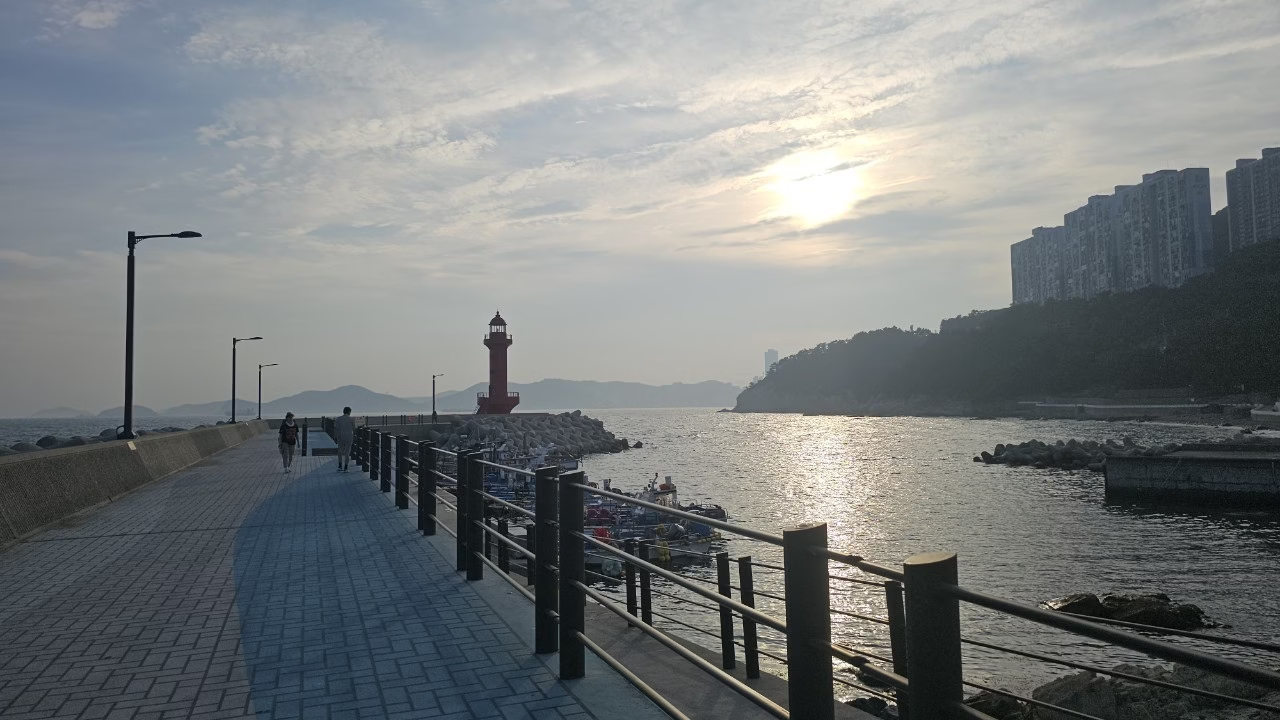
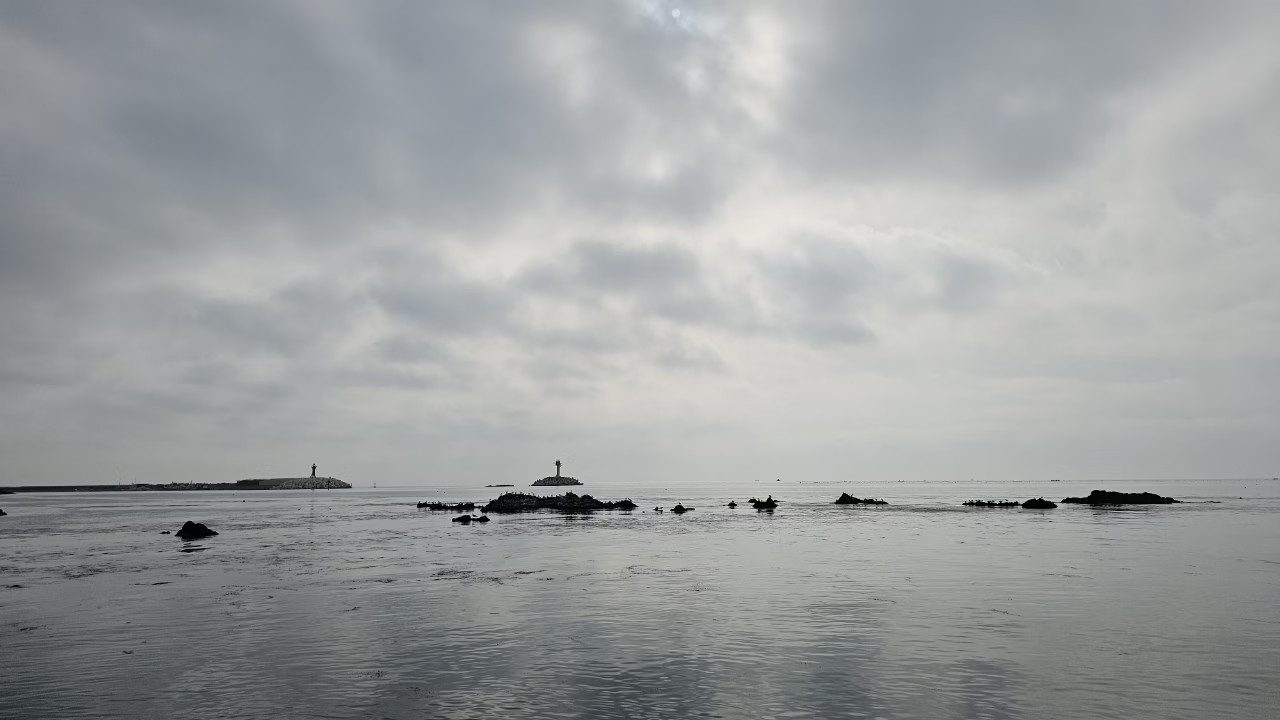
부산 갈맷길 3-3 코스 흰여울문화마을 태종대

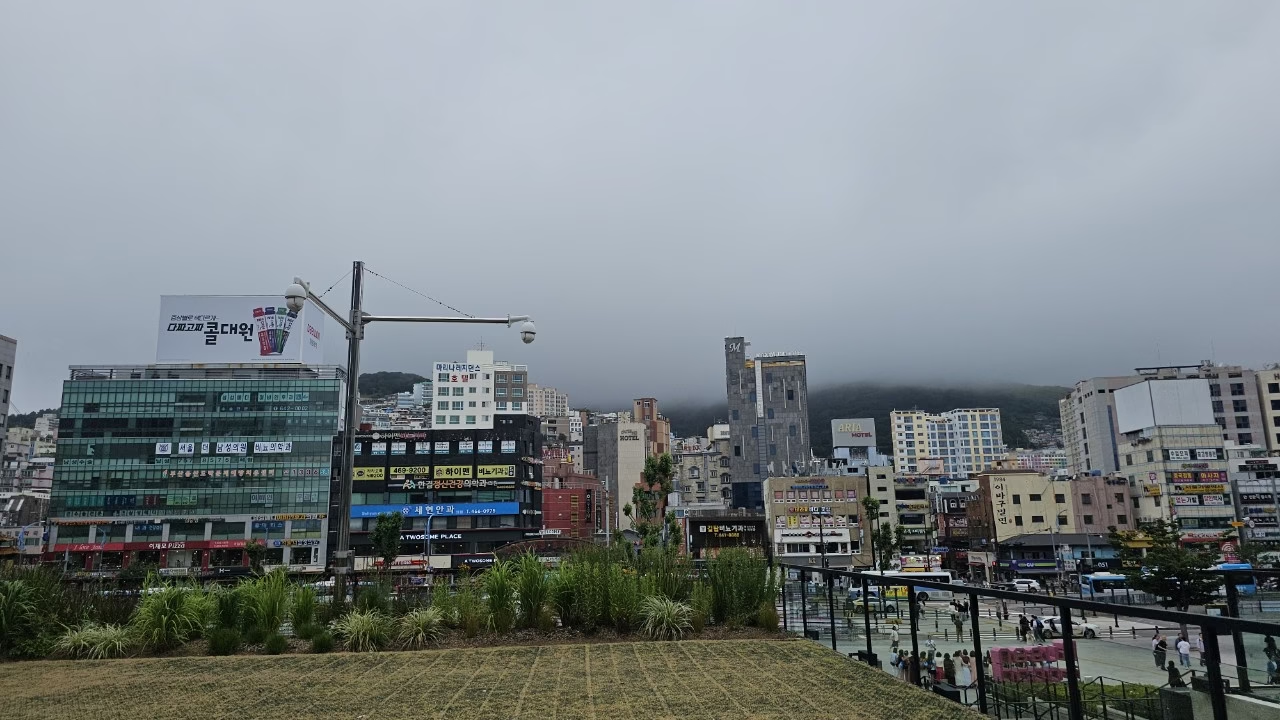
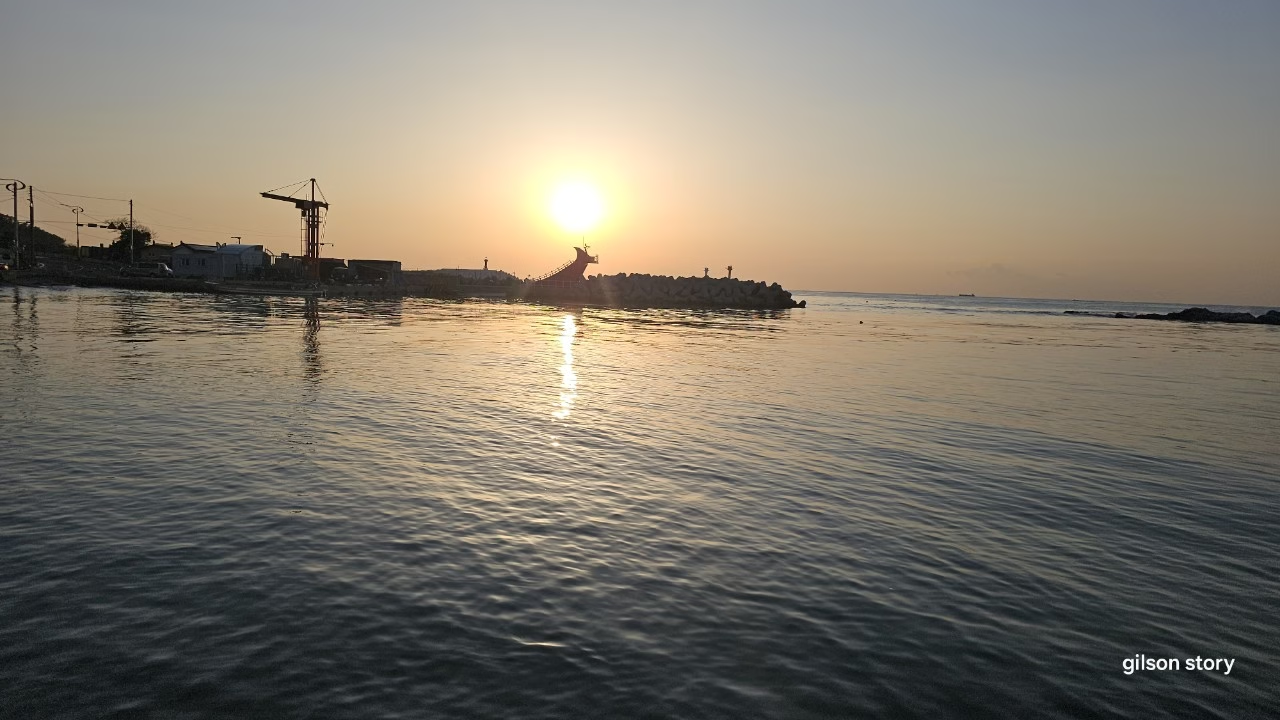
부산 갈맷길 코스 3-2코스 자갈치 시장 국제시장

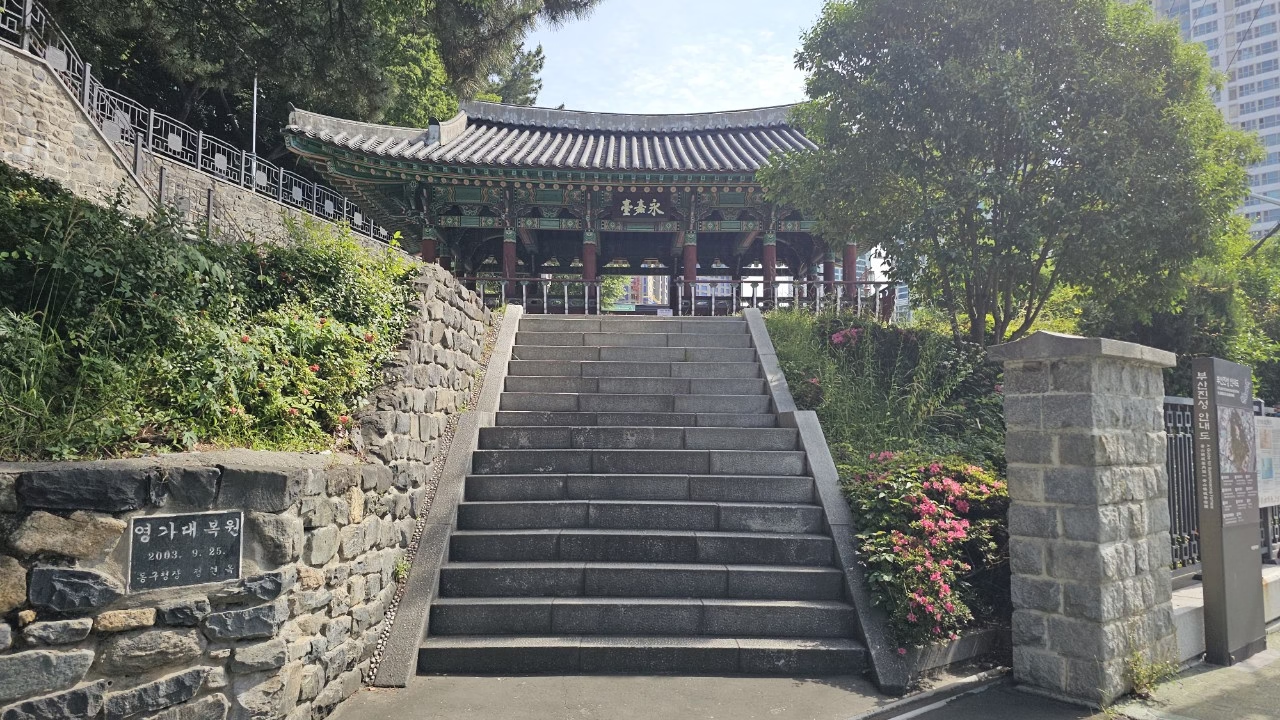
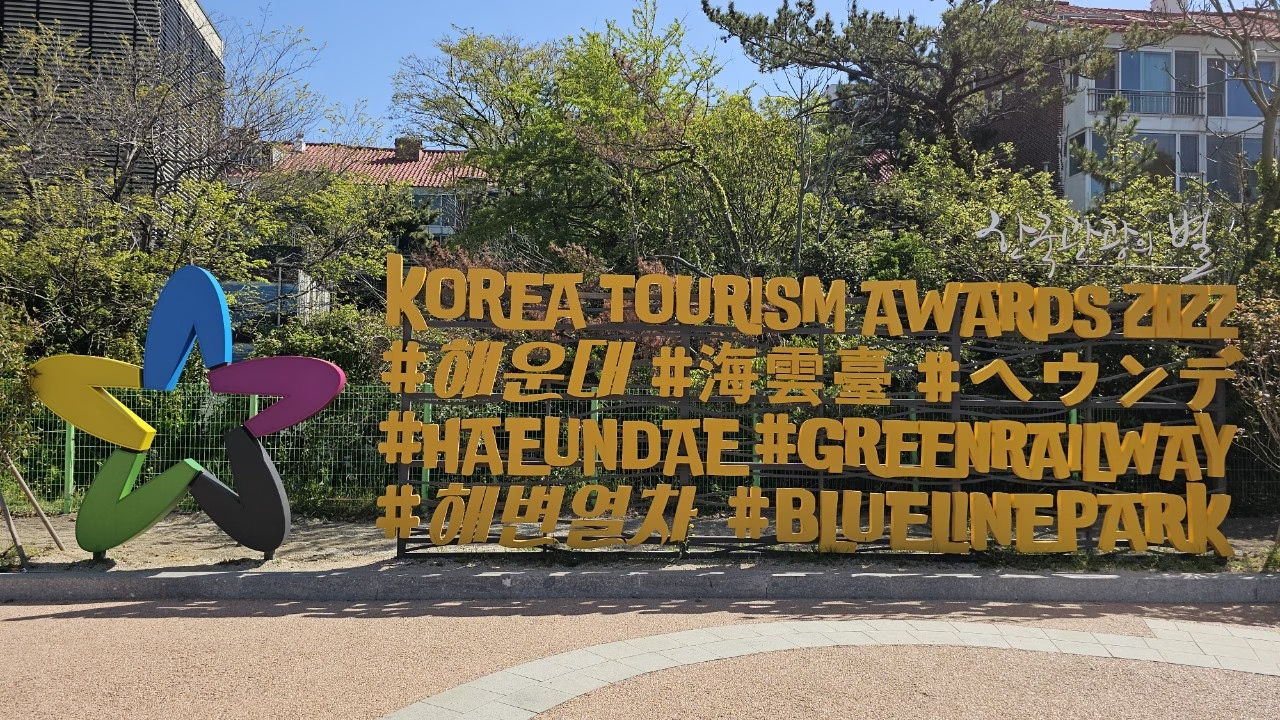
부산 갈맷길 코스 2-1코스 해운대 블루라인 파크 동백섬

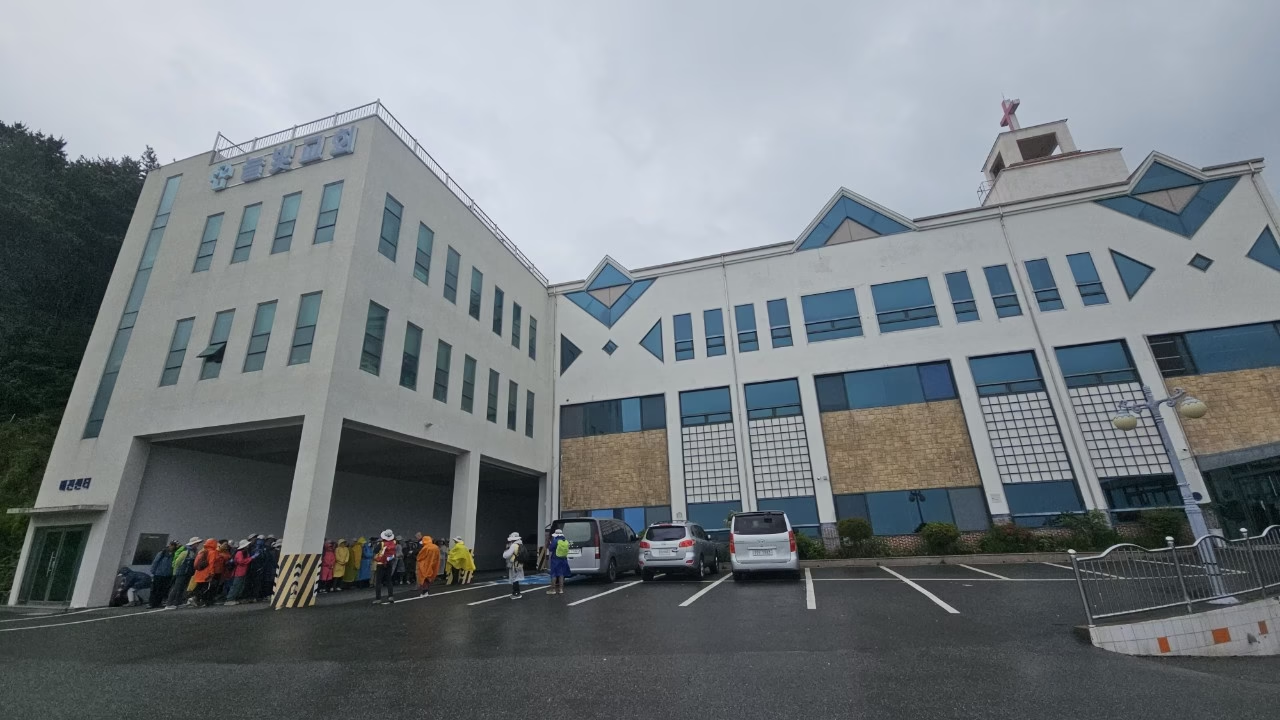
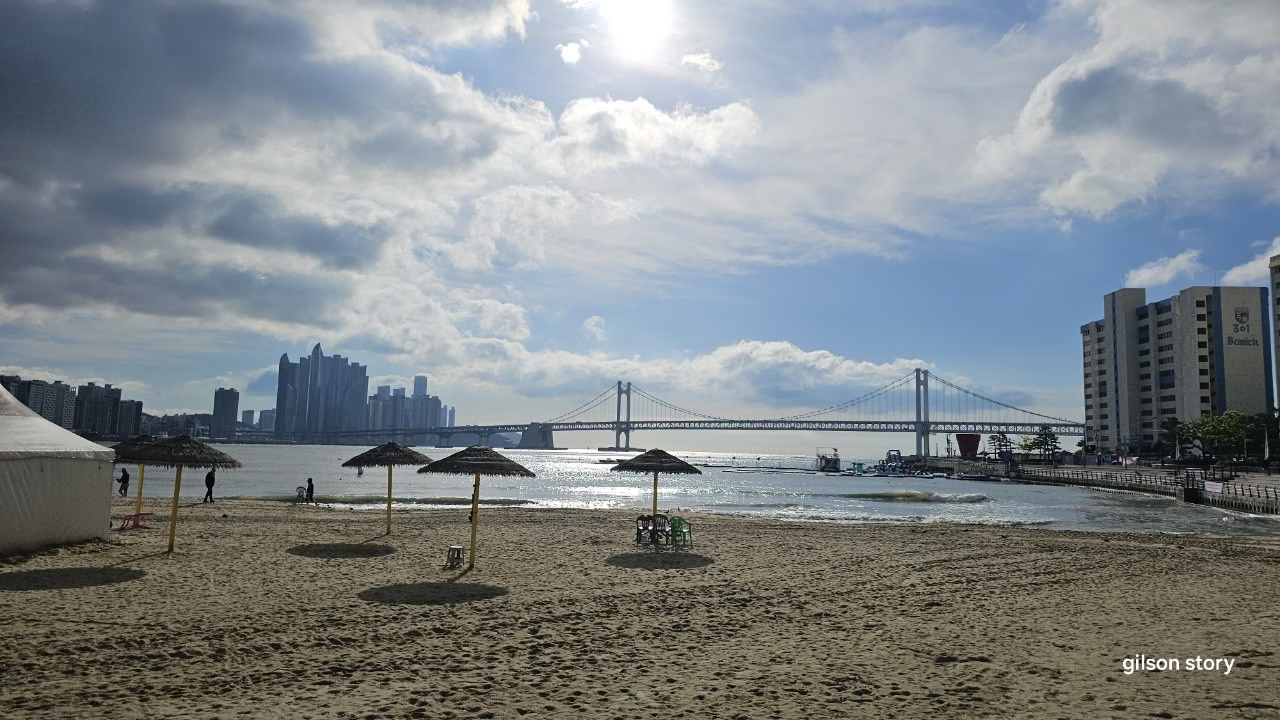
부산 갈맷길 코스 4-1코스 송도해수욕장 감천 문화 마을